Public Education and Outreach
Empowering Our Community Through Safety Education
At Sylvania Fire-EMS, we believe emergency response begins with prevention. We are fully committed to delivering high-impact public outreach and safety education tailored to the needs of our community. By equipping residents with dynamic safety training, local awareness programs, and preventative planning tools, we work together to minimize local fire and medical risks. Discover our community resources today to build a safer, more resilient Sylvania.
Request for Public Education-
Call Fire Marshal Hillard at 419-882-7676 Ext. 1670 or at shillard@stfd-oh.gov

-
If you would like to request smoke/ carbon monoxide detectors, please contact Fire Marshal Shane Hillard @ Shillard@stfd-oh.gov or 567-408-8199
-
If you or your organization is interested in a Fire Station Tour, please contact Fire Marshal Shane Hillard @ Shillard@stfd-oh.gov or 567-408-8199
-
If you or your organization is interested in a Safety presentation, please contact Fire Marshal Shane Hillard @ Shillard@stfd-oh.gov or 567-408-8199
-
If you would like a home fire safety inspection, please contact Fire Marshal Shane Hillard @ Shillard@stfd-oh.gov or 567-408-8199
-
If you or your organization is interested in a Fire Extinguisher Training , please contact Fire Marshal Shane Hillard @ Shillard@stfd-oh.gov or 567-408-8199
-
Please contact Battalion Chief Steve Kahan @ Skahan@stfd-oh.gov or 419-882-7676 Ext. 1630
-
If you or your organization is interested in a Stop the Bleed presentation, please contact Battalion Chief Steve Kahan @ Skahan@stfd-oh.gov or 419-882-7676 Ext. 1630


Knox Box
The Knox Box Rapid Entry System is a secure emergency access program developed for property owners and fire departments. When a fire breaks out or there is an emergency, the Knox Box Rapid Entry System allows firefighters and paramedics immediate entry into buildings and property without forced entry damage or delay. Knox Boxes can be placed on a home or business.
How do I order one?
For a residential Knox Box visit knoxbox.com and select your local fire department: Sylvania Twp Fire Dept. Select the Knox Home Box and add it to cart. Fill out the installation address and purchase. Once purchased, contact the Sylvania Fire-EMS Department at 419-882-7676 Ext. 1670.
The Knox Box should be installed at the front entrance of a structure. Anytime the door locks are changed or re-keyed, the property owner should notify the Sylvania Fire-EMS Department to place a new key in the box.
For a commercial Knox Box, visit knoxbox.com/commercial and follow the above instructions. The cost varies depending on the selection of the Knox Box.
Smoke Alarms
Smoke alarms are more effective – and more complicated – than they used to be. For instance, they may be battery-powered or hard-wired with a battery backup, stand alone or connected to each other. They may use photoelectric or ionization technology, or both. Maintenance and replacement needs can vary, too.
Smoke alarms should be placed, at a minimum, on every floor level, inside every sleeping room, and outside of every sleeping area. Choose smoke detectors that are wired and interconnected, or battery-powered units that communicate with each other so that when one detector alarms, they will sound throughout your home.
Experts recommend that home smoke alarms be checked monthly, batteries be replaced every six months, and smoke alarms be replaced every ten years. Dust should be vacuumed from them on an annual basis.

-
TEACHING YOUR CHILD ABOUT 9-1-1
Helping kids know when—and how—to call for help
Emergencies can be scary, especially for children. One of the best things a caregiver can do is help a child understand that 9-1-1 is there to help when someone needs immediate emergency assistance.
Talking about 9-1-1 before an emergency happens can help your child feel more confident and know what to do if they ever need help.
-
HELP YOUR CHILD RECOGNIZE AN EMERGENCY
Children may not always know what qualifies as an emergency. Talk about situations they can understand, such as:
🔥 A fire or a house filled with smoke
🚗 A serious car crash
🩹 Someone who is badly hurt or bleeding
❤️ Someone who is unconscious or having trouble breathing
🚨 Someone is in immediate danger
👮 A crime or dangerous situation happening right now
Also explain that some situations are not 9-1-1 emergencies, such as being bored, losing a toy, or having a lost pet.
The goal isn't to scare your child. It's to help them understand the difference between needing help right away and a problem that can wait.
-
Make sure your child knows:
Their full name
Their home address
Their phone numberIf you live in an apartment, condominium, or mobile home community, teach your child the apartment, unit, or lot number as well.
Practice saying the address out loud together. During an emergency, knowing the location is one of the most important pieces of information a 9-1-1 telecommunicator needs.
-
TEACH THEM HOW TO CALL
Children should know how to call 9-1-1 from the phones they may have access to, including a cell phone.
Teach them to say:
“Nine-one-one,” not “nine-eleven.”
There is no 11 button on a telephone.
If possible, practice using a phone that is not connected to 9-1-1 so your child can learn what to do without actually placing an emergency call.
Instruct your child not to hang up until the dispatcher says its ok to hang up.
-
Teach your child that getting to a safe place comes first.
For example, if there is a fire in the house, leave the home and call 9-1-1 from a safe location if possible.
Children should never go back inside a burning or dangerous building to get a person, pet, toy, or other belongings.
-
Accidents happen.
If your child accidentally calls 9-1-1, tell them not to hang up.
Instead, stay on the line and tell the telecommunicator that the call was accidental. Hanging up can make the telecommunicator believe an emergency may be occurring.
Kid Zone
Firefighters need your help keeping Sylvania safe! Learn what to do when a smoke alarm sounds, create an escape plan with your family, and discover how you can prevent fires at home.
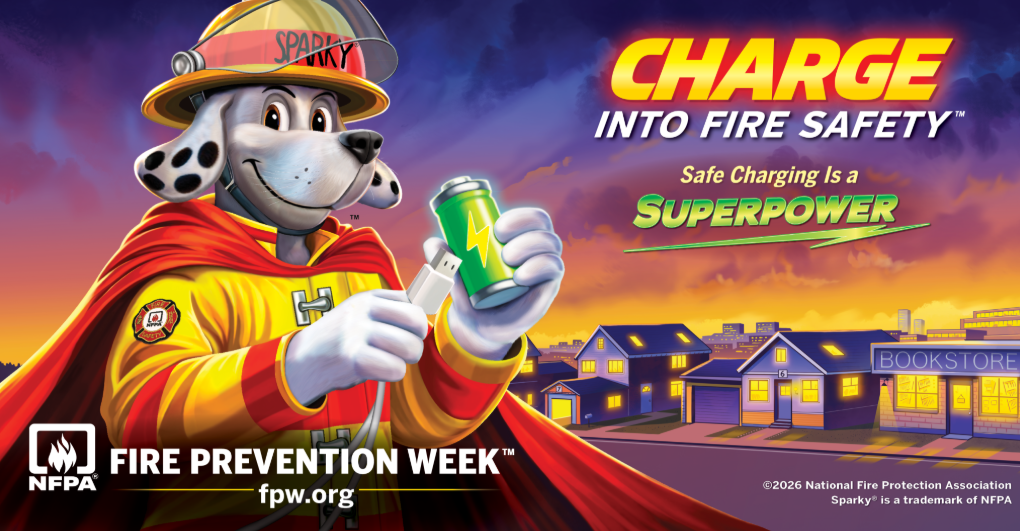
Sparky the Dog from National Fire Protection Association
Sparky the Fire Dog was created for the NFPA in 1951 and has been the organization’s official mascot and “spokes dog” ever since. He is a widely recognized fire safety icon, and is beloved by children and adults alike.
FEMA for KIDS
Do you know about different kinds of weather events and other unexpected situations? Learn the words and terms you hear during emergencies. It can be confusing. Be informed. From natural disasters to pandemics or terrorism, know what to do before, during, and after. Create emergency kits, play games, and learn more about handling emergencies. There are even sections for parents and teachers. F.E.M.A. (Federal Emergency Management Agency)
Other general Fire Safety educational links:
Fire Prevention and Important Safety Information
Fire Safety Information in the Home
https://sparkyschoolhouse.org/